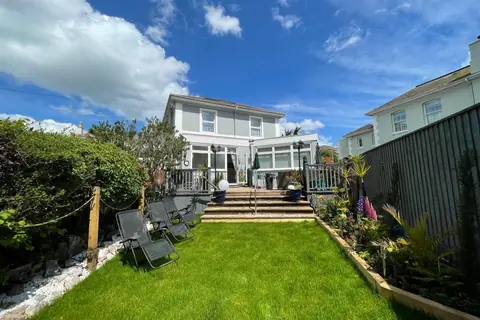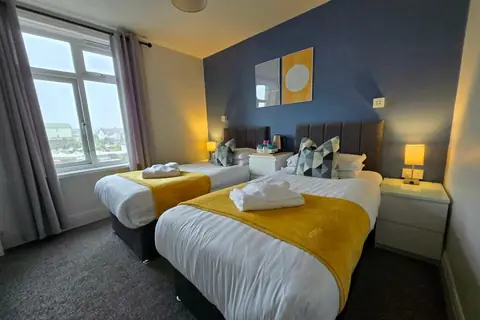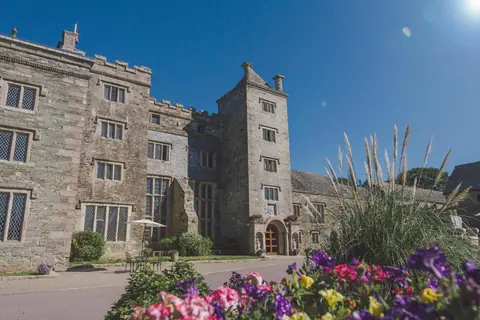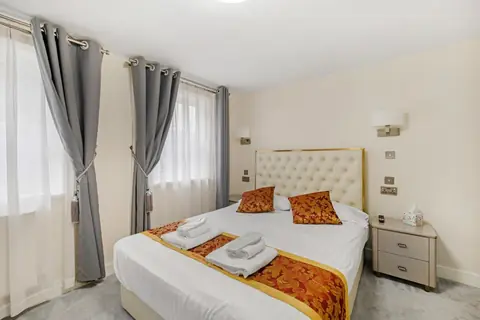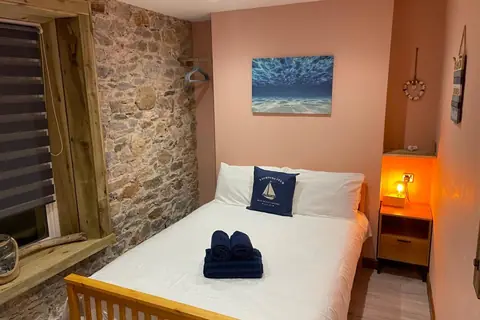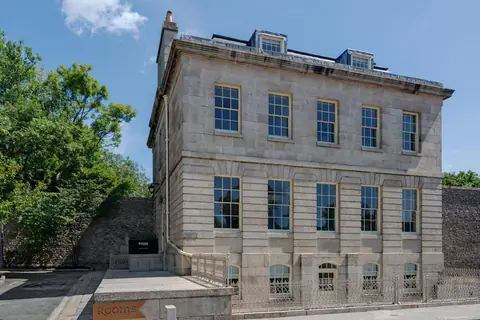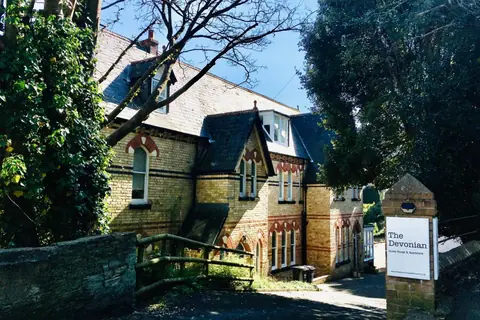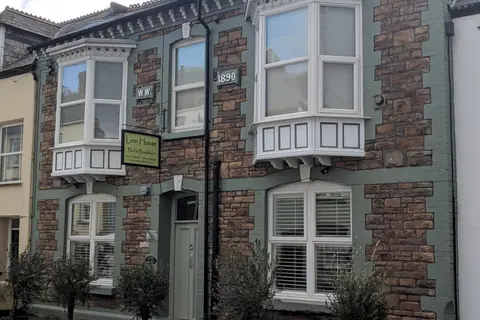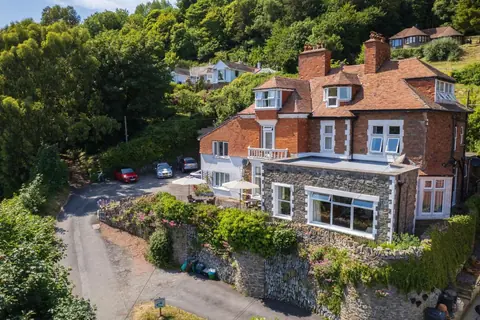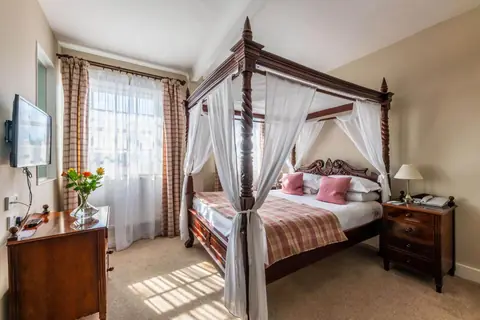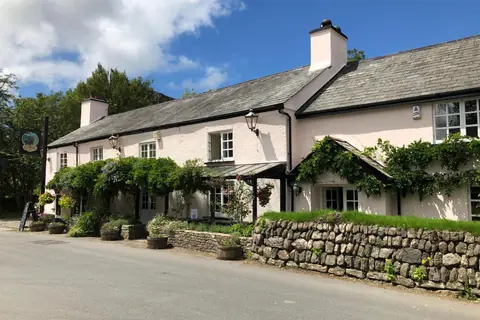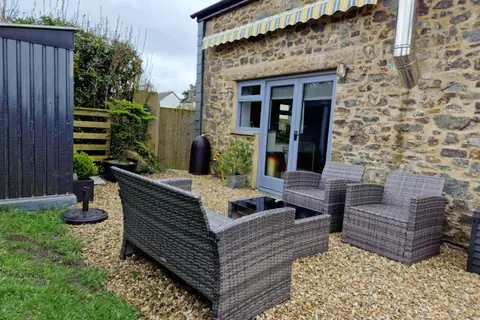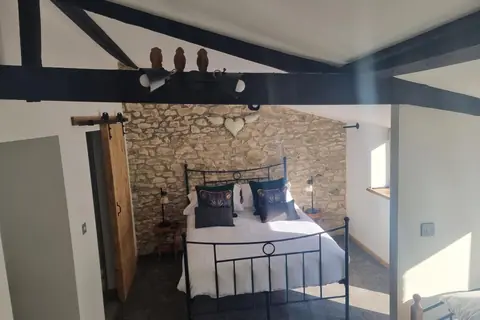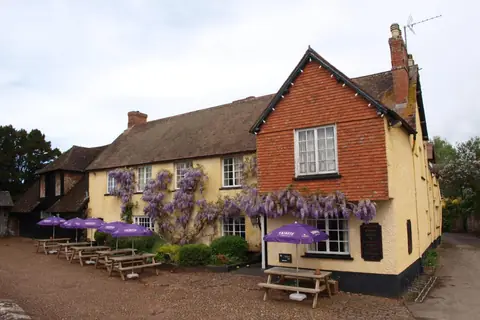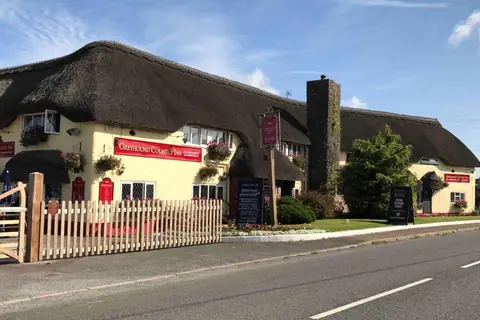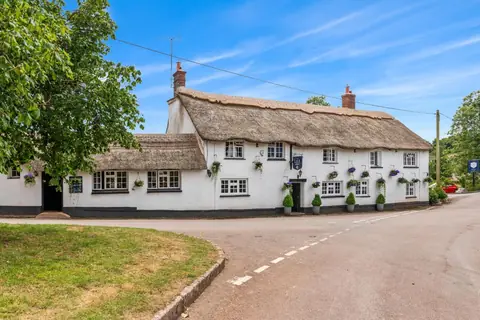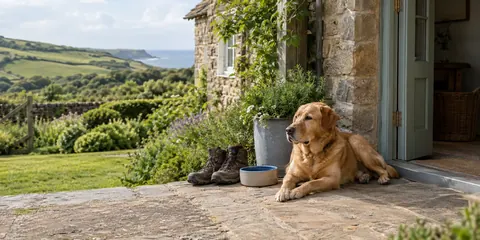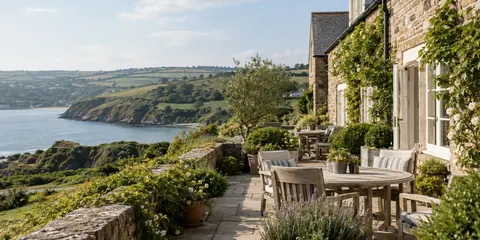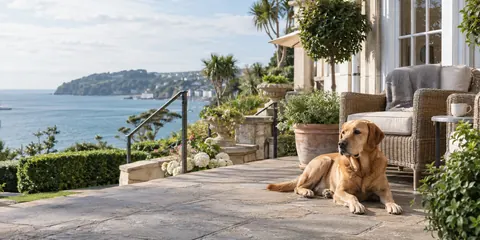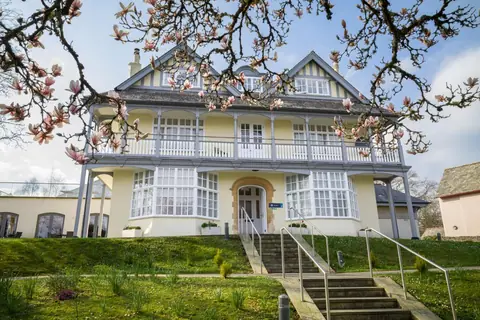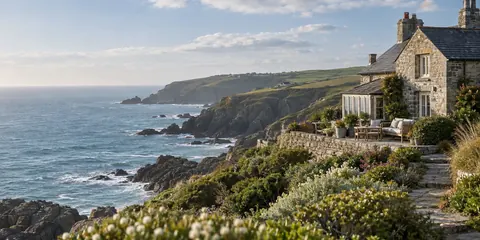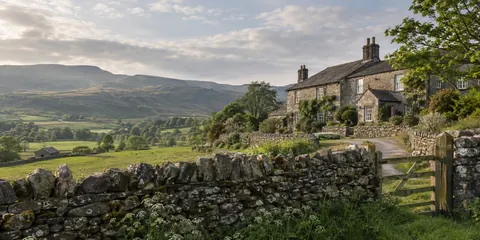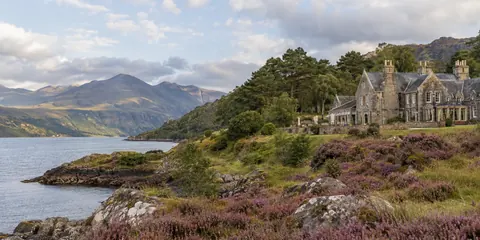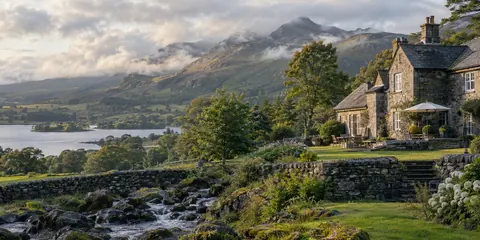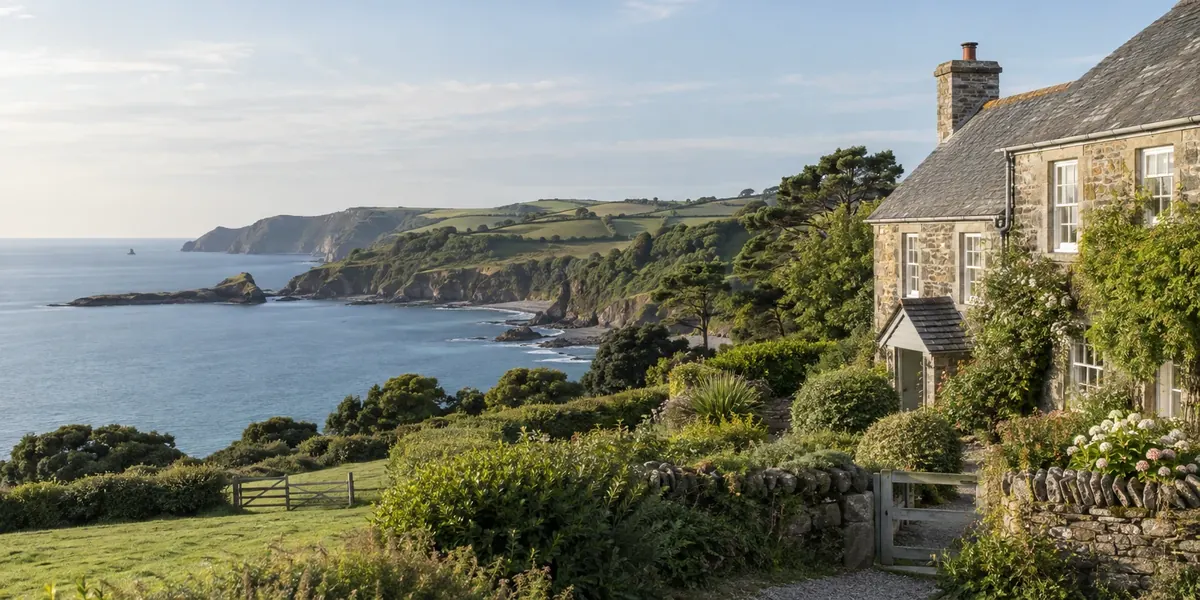
Where to stay in Devon: illustrative photo of countryside and a stone-built house

Destination

Where to Stay in Devon

Devon covers a lot of coastline and one large national park, and the right base depends on what you want between days out. The English Riviera coast around Torquay and Paignton gives you a promenade and sandy beaches, while South Hams, around Salcombe and Dartmouth, suits sailing and the coast path.

By the ChooseMyHotel editorsUpdated Not yet checked with the properties

North Devon, around Ilfracombe, Woolacombe and Exmoor's edge at Lynton and Lynmouth, has bigger surf and wilder cliffs.

Inland, Dartmoor National Park brings moorland, tors and granite villages such as Moretonhampstead and Lydford, with weather that can change fast. Exeter and the east, including Sidmouth and Honiton, suit a cathedral city base or the Jurassic Coast. Trains run into Exeter, Plymouth, Paignton and Barnstaple, and a car helps most on Dartmoor and along the smaller coastal lanes.

Where to base yourself

English Riviera coast

Torquay and Paignton sit on Torbay, known as the English Riviera, with sandy beaches, a harbour and a seafront promenade linking both towns. Brixham sits at the southern point of the bay, near Berry Head. It is a working fishing harbour, and it marks the edge of the South Devon National Landscape, the protected coastline that continues towards Dartmouth.

The Riviera Line brings trains from Exeter through Newton Abbot to Torquay and Paignton, making this the easiest part of Devon to reach without a car. Newton Abbot itself is a market town and rail junction, useful as a quieter, cheaper base with fast links along the coast. For dog-friendly hotels in Torquay or a wider search of hotels in Torquay, start here if beaches matter most.

On our lists here
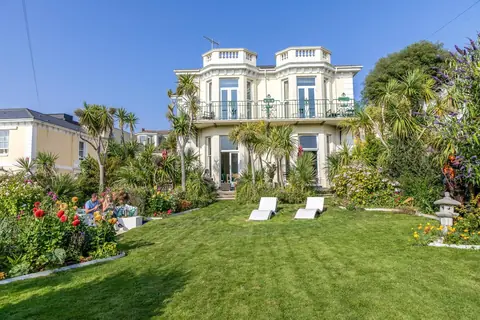
South Hams and Plymouth

South Hams is the stretch of coast and countryside between Torbay and Plymouth, and most of it lies within the South Devon National Landscape. Salcombe and Dartmouth are both sailing towns on tidal estuaries, with steep lanes, boat trips and coast path walks rather than long sandy beaches. Neither town has a railway station, so most visitors arrive by road or via Totnes or Plymouth.

Plymouth, a city with its own mainline station, works as a base if you want ferries or a wider choice of restaurants. It also gives easy road access into South Hams and towards the Tamar Valley National Landscape on the Cornwall border. Expect narrow lanes and limited parking in Salcombe and Dartmouth once summer gets busy.

On our lists here

North Devon coast and Exmoor fringe

Woolacombe, Ilfracombe and Combe Martin sit within the North Devon Coast National Landscape, a mostly coastal protected area running between Exmoor and the Cornwall border. Woolacombe has one of Devon's longest sandy beaches and is popular for surfing, while Ilfracombe is a working harbour town with a wider range of shops and places to eat. Combe Martin marks the point where this coast meets Exmoor National Park.

Lynton and Lynmouth, linked by a Victorian cliff railway, lie inside Exmoor National Park, with steep wooded valleys running down to the sea. Barnstaple, inland on the River Taw, is North Devon's main town and the terminus of the Tarka Line train from Exeter, the most practical base for a direct rail journey. Expect winding roads and longer drives between villages away from the A361.

On our lists here

Dartmoor and inland

Moretonhampstead sits inside Dartmoor National Park on its north eastern edge, with high moorland to the south and west. Lydford, on the park's western boundary, is known for Lydford Gorge, the deepest gorge in the South West, and for its two castles. Chudleigh lies just outside the park boundary to the east, in the Teign Valley, and works as a base for reaching the moor without staying on it.

Dartmoor's weather can change quickly, with ice and fog common in winter. The National Park Authority advises checking forecasts, carrying a map and compass, and sticking to the fringes of the high moor if you're not experienced. Roads across the open moor are narrow and unlit, so allow extra time after dark.

On our lists here

Exeter and the east

Exeter is Devon's cathedral city and main transport hub, with mainline trains to London, Bristol and the rest of the South West, plus the Riviera and Tarka lines starting here. It suits a base if you want city amenities alongside day trips to the coast or Dartmoor. Cullompton and Tiverton, both in Mid Devon, sit near the M5 and Tiverton Parkway station, making them useful, quieter bases for driving around the county.

Sidmouth and Honiton lie within the East Devon National Landscape, an area of coast and countryside that includes part of the Jurassic Coast. Sidmouth is a seafront town with Regency architecture and cliff walks in both directions, while Honiton, on the River Otter, is known for its antiques shops and its Saturday market. Both are within reach of Exeter by road or bus rather than by direct train.

On our lists here

Our lists for Devon

A few stays from those lists

Practical information

Getting there

Exeter and Plymouth both have mainline stations with direct trains from London Paddington and other cities, run by Great Western Railway. From Exeter, the Riviera Line reaches Newton Abbot, Torquay and Paignton, and the Tarka Line reaches Crediton and Barnstaple. The M5 ends near Exeter, and the A38 and A30 continue into South Devon, Plymouth and Cornwall.

Parking

Salcombe, Dartmouth and Ilfracombe have limited on-street parking and can fill their main car parks on summer weekends. Inland towns generally have more space, though Dartmoor's own car parks are small and fill early on fine days.

Getting around without a car

Trains cover Exeter, Newton Abbot, Torquay, Paignton, Plymouth and Barnstaple directly. Bus services connect smaller towns, including routes onto Dartmoor and the north coast, and Traveline covers timetables across the county.

Best time to visit

Dartmoor's high ground can see snow, ice and thick fog in winter, and the National Park Authority recommends checking the forecast before any walk onto open moorland. Coastal towns are busiest from late July to August, when parking and popular beaches fill earliest in the day.

Other destinations

Where to stay in Devon: questions

Which part of Devon should I stay in for beaches?

The English Riviera coast around Torquay and Paignton has the most sandy beaches close to hotels and a seafront promenade. For bigger surf beaches, North Devon around Woolacombe and Ilfracombe is a better match, though it's further from Exeter and has fewer direct trains.

Is Dartmoor within reach of any towns to stay in?

Moretonhampstead and Lydford both sit inside Dartmoor National Park, on its north eastern and western edges. Chudleigh is just outside the boundary, in the Teign Valley, and works as a base for day trips onto the moor without staying on open moorland.

Can you reach Devon by train without a car?

Yes. Mainline trains serve Exeter and Plymouth, the Riviera Line reaches Torquay and Paignton, and the Tarka Line reaches Barnstaple. Smaller towns such as Salcombe and Dartmouth have no station, so you'll need a bus, taxi or car for the final leg.

Are Salcombe and Dartmouth in a national park?

No, but both sit within the South Devon National Landscape, a protected stretch of coast and countryside between Torbay and Plymouth. The area covers most of South Hams, including the estuaries and coast path around both towns.

When is the quietest time to visit Devon?

Outside late July and August, coastal towns and Dartmoor car parks are noticeably quieter. Winter brings a real risk of ice and fog on higher parts of Dartmoor, so check conditions with the National Park Authority before walking onto open moorland.

Sources