Before you book: the questions that matter
A listing that says dogs are welcome does not tell you much on its own. Hotels set their own rules, and they vary a lot between one dog-friendly property and the next. Ask these questions when you book, by phone or email, and get the answer in writing where you can.
Booking platforms often show a dog-friendly filter without showing the detail behind it. A direct call or email to the hotel is worth the extra few minutes. Staff who can answer these questions confidently are a reasonable sign that the hotel is genuinely set up for dogs, rather than tolerating them as an afterthought.
- Is the fee charged per dog, or per stay?
- How many dogs can you bring?
- Is there a size or weight limit?
- Where can your dog go: the bedroom only, the bar, the dining room, the garden?
- Can you leave your dog alone in the room, and for how long?
- Does the hotel provide bedding and bowls, or should you bring your own?
- Is a ground-floor room available, and is there a nearby spot to let your dog out?
What a dog fee actually covers
Some hotels charge a flat fee for the stay, however many nights you book. Others charge per dog, per night, which adds up fast if you are travelling with two dogs for a week. The fee usually covers extra cleaning and, in some cases, a dog bed or bowls left in the room. It rarely covers damage beyond normal wear, so ask what happens if your dog is sick or chews something.
If a listing mentions dogs without giving a fee, do not assume it is free. Confirm the amount when you book, and ask whether it is payable on arrival or added to your final bill.
Size and number limits are separate from the fee, and just as easy to miss. A hotel that welcomes small dogs may set a weight limit that rules out a larger breed. A cap of one or two dogs per room is common, even where the fee is charged per dog rather than per stay. If you are travelling with more than two dogs, check this before you book rather than at check-in.
Where dogs are allowed inside the hotel
Dog-friendly does not automatically mean dogs are welcome everywhere on site. Many hotels allow dogs in the bedroom and garden but not the dining room, on food hygiene grounds. Some dog-friendly pubs with rooms allow dogs in the bar area but not upstairs, or the other way round. Ask specifically about the bar, the dining room and any lounge or snug. A yes for the bedroom does not always cover the rest of the building.
If you are booking a dog-friendly cottage rather than a hotel room, the same questions still apply. Check shared areas such as a communal garden or an on-site farm shop too.
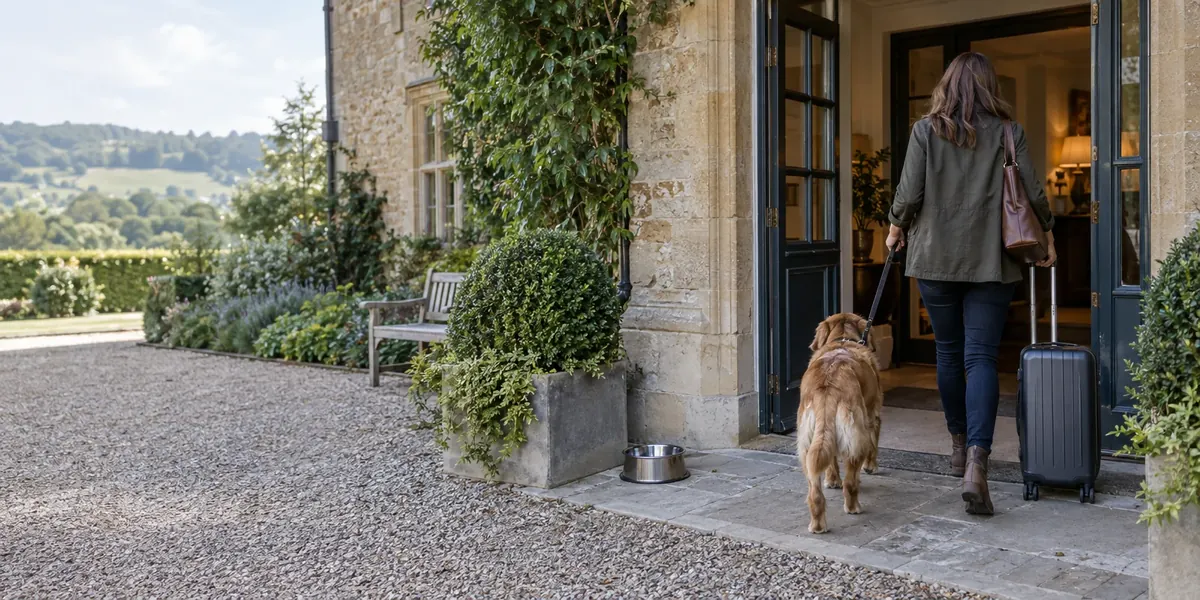
A ground-floor room makes the difference between a straightforward late-night toilet break and several flights of stairs with a nervous dog. If this matters to you, ask for a ground-floor room when you book. Confirm there is somewhere close by to let your dog out, rather than assuming the car park will do.
Can you leave your dog alone in the room
This is one of the most commonly overlooked questions, and hotels differ sharply on it. Some allow you to leave a settled dog for short periods, such as during dinner, as long as you tell reception first. Others do not allow dogs to be left unattended at all, because of noise complaints from other guests or insurance conditions.
Ask what the hotel's policy is, and be honest about how your dog behaves alone. A dog that is not used to being left in unfamiliar surroundings is more likely to bark. A written policy protects you if a neighbouring guest complains.
If the hotel does allow a dog to be left for short periods, ask whether housekeeping needs to know. Some hotels ask you to leave a mobile number at reception, so staff can reach you quickly if your dog is unsettled. Doing this is worth it even where it is not required.
What to pack
Bring what your dog is used to at home, rather than relying on what the hotel might supply. The basics that make the biggest difference to a dog settling into a new room are familiar bedding, food and a couple of home comforts.
- Your dog's usual food, in case the local shops do not stock it
- Lead, poo bags and a water bowl for the journey and for walks
- A bed or blanket that smells like home
- A favourite toy
- Proof of vaccination or a pet passport, if the hotel or a nearby attraction asks for it
- Bowls, unless the hotel confirms it provides them
For the journey itself, pack enough food for the whole trip in case local shops do not stock your dog's usual brand. Bring water and a bowl for regular stops. If you are travelling any distance, stop and let your dog stretch its legs before you arrive. It will settle into the new room more calmly than after hours cooped up in the car.
The rules that apply outdoors
Once you step outside the hotel, the Countryside Code sets out how to walk your dog responsibly. Some of it is a legal requirement rather than a suggestion.
Livestock and leads
The Countryside Code advises keeping your dog on a lead around livestock wherever you are walking. On Open Access land and at the coast, this is a legal requirement rather than good practice. Between 1 March and 31 July, dogs must be kept on a lead on Open Access land, even if you cannot see any livestock. The Dogs (Protection of Livestock) Act makes it an offence for a dog to worry livestock. That includes chasing, or being loose in a field in a way that could cause them stress.
If cattle or horses approach and you feel threatened, the Countryside Code advises letting your dog off the lead rather than trying to hold on to it. This makes it easier for you and your dog to reach safety. Do not put yourself at risk trying to protect your dog from livestock.
Keeping your dog under control
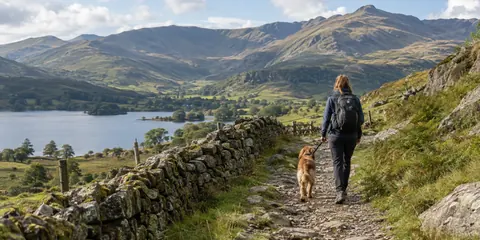
Away from livestock, the Code still asks you to keep your dog under effective control. That means on a lead, or close enough to call back immediately, and never straying from the path where you have a right of access. Check local signs, since some sites ask for dogs on leads for all or part of the year, including around ground-nesting birds.
None of this is specific to hotel stays, but it shapes the kind of walks you can plan from a rural hotel. If off-lead exercise matters to your dog, ask the hotel or check the relevant National Park Authority for local advice before you arrive. It is better than finding out about a livestock field once you are already walking through it.
Choosing where to stay
Our lists cover dog-friendly hotels, dog-friendly cottages, dog-friendly pubs with rooms and dog-friendly bed and breakfasts across the UK. We note the dog fee, house rules and ground-floor availability where we have confirmed them. If you are heading to the Lake District specifically, see our pick of dog-friendly hotels in the Lake District.
A pub with rooms often suits a dog better than a large hotel. The bar is usually the most dog-friendly space in the building, and the walk from car to room tends to be short. A cottage suits owners who want their dog to have the run of a garden without asking permission each time. A hotel or B&B works well when you want breakfast made for you, with a member of staff on hand if something goes wrong. None of these is automatically the right choice, so match the format to how your dog actually behaves away from home.