There's no official definition
In the UK, hotel quality is formally assessed by VisitEngland, and its sister bodies VisitScotland, Visit Wales and Tourism NI, and by the AA. Both use star ratings running from one to five. Neither scheme has a separate "boutique" category anywhere in its published standards.
VisitEngland's quality schemes cover hotels, B&Bs, self-catering properties, hostels, holiday parks and more. Hotels can additionally earn a Gold or Silver Award, or a ROSE Award for service.
None of that machinery labels a property boutique. The AA runs the equivalent star-rating system across the UK and Northern Ireland, and doesn't use the term either. VisitBritain, which oversees quality assessment for tourism businesses more broadly, lists no boutique category on its own pages.
That means "boutique hotel" on a listing is a description the property has chosen for itself, not a rating anyone has checked. It's a useful word, but it isn't a guarantee. Two hotels calling themselves boutique can be quite different from each other in size, price and style.
What the word usually signals
Even without an official definition, "boutique" is used fairly consistently across UK hotel listings. It tends to point to a combination of these traits, though rarely all of them at once, and rarely in the same proportions from one hotel to the next.
- Independently owned, or part of a small group rather than a large chain
- A small number of rooms, often under 50
- Rooms individually decorated or styled, rather than identical across the property
- A building with some age or character, such as a townhouse, coaching inn or converted mill, rather than a purpose-built block
- Personal service, with owners or managers visibly involved rather than a standardised chain process
None of these traits is required for a hotel to call itself boutique. A large, professionally run independent hotel can use the word just as easily as a five-room townhouse can. The word describes a style of hotel, not a size threshold or a fixed checklist of features that someone has ticked off.
How to judge it from a listing
Because nobody checks the claim, the listing itself is where you have to do the work. A few things are worth reading for specifically, rather than taking the label at face value on its own.
Look for detail, not adjectives
A listing that names the building's history, describes how rooms differ from each other, or names the owner or designer is telling you something concrete. A listing that just repeats "boutique", "stylish" and "unique" without any detail underneath is telling you less than it sounds like, however well it reads on the page.
Check who runs it
If the hotel is part of a large group with dozens of near-identical properties, the boutique label is describing the group's house style. It isn't telling you anything specific to that one building on that one street. That isn't necessarily a problem, but it's a different kind of stay to an independently owned single hotel, and it's worth knowing before you book if it matters to you.
Look at room photos, not just the lobby
Boutique hotels are sold on atmosphere, and lobby and bar photos are usually the strongest ones on the page. Check whether the actual bedrooms carry the same character, or whether they look more generic than the public spaces suggest. A gap between the two is a reasonable prompt to ask more questions before you book.
Questions worth asking before you book
If the boutique label matters to why you're booking a particular stay, a short question to the property can confirm what the listing implies but doesn't state outright. It's also worth browsing hotels in the UK more broadly to compare how the word is used across different properties and price points.
- Is every room individually decorated, or are some rooms standard?
- Is the hotel independently owned, or part of a wider group?
- How many rooms does the hotel have?
- Is the building original, or a modern build styled to look older?
- What's included, and what costs extra: is there a restaurant, bar or parking on site?
A property that can answer these clearly, without repeating marketing language back at you, is usually telling you the truth about what kind of place it is. One that dodges the specifics is worth a second look before you commit to booking.
Boutique versus other labels
"Boutique" is often used alongside other loose labels, and it's worth knowing how they differ, even informally. "Luxury" is about the standard of fittings, service and facilities, and says nothing about size or ownership. A large chain hotel can be luxury without being remotely boutique, and a small independent hotel can be boutique without being luxury at all.
"Design hotel" usually points to a stronger focus on architecture and interiors than boutique implies, sometimes at the expense of the personal, family-run feel that boutique often suggests. "Characterful" is looser still, and can describe almost any older or unusually laid-out building, whether or not it has the small scale or individual styling associated with boutique.
None of these labels are regulated
The same point applies to all of them: none is assessed by VisitEngland, VisitScotland, Visit Wales, Tourism NI or the AA as a separate category. They're marketing shorthand, useful for narrowing down what you're looking at, but not a substitute for reading what the property actually says about itself.
That's not a criticism of the words themselves. A hotel that calls itself boutique, characterful or design-led is telling you something about how it wants to be seen, and that's a reasonable starting point. It just isn't a checked fact, in the way a star rating or an award from a named body is.
Where the word can mislead
A handful of patterns are worth watching for. Chain hotels sometimes brand one sub-line as "boutique" while running it with the same booking systems, staffing model and room layouts as their other properties.
In that case the word describes marketing rather than the stay itself, and you shouldn't expect the individuality that the word usually implies when you read it on a listing.
New-build hotels can also use the word to describe a design choice: styled interiors in a purpose-built block, rather than a historic building with genuine age. That isn't dishonest, but it's a different feel to a converted Georgian townhouse, even if both call themselves boutique on the same booking page.
Finding boutique-style hotels by area
The traits people associate with boutique hotels, independent ownership, converted historic buildings and individually styled rooms, turn up more often in some parts of the UK than others.
Georgian and Regency towns, former market towns and cities with a strong independent hospitality scene tend to have more of this kind of property. Areas dominated by larger chain hotels near motorways and airports tend to have fewer.
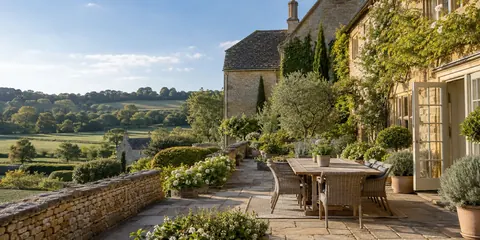
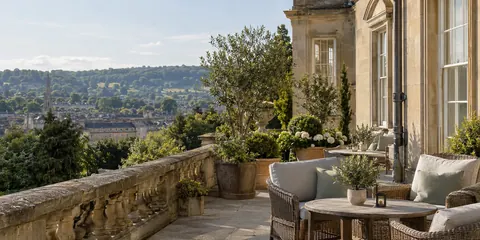
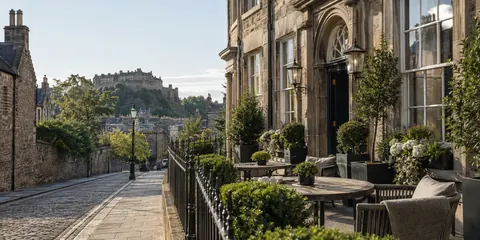
Our regional hotel lists, such as hotels in the Cotswolds, hotels in Bath and hotels in Edinburgh, include a mix of independent and chain properties. Read the description on each one rather than relying on the word boutique alone, and use the questions above to check whether a listing matches what you're actually looking for.